Blog Archive

Saturday, 18 October 2025

October


 For some of my friends October is Inktober a month to try artistic skills with pen and ink or indeed anything using ink that makes marks on paper.  There is a website of course - these things become highly organised on the internet - but the artistic efforts of friends young and old on Facebook are just as interesting.  And October is also a pink month - in France the proliferation of pink umbrellas in towns and cities signals the very creditable support for the fight against breast cancer - you might say 'pinktober' though this has not caught on as a label.   Plenty of beautiful roses here though at other times of the year.


Politics is inescapable.  Around Europe looming elections in various countries raise images of freedom teetering on the brink like the hut on the edge of a cliff in the Charlie Chaplin film. I keep wondering what kind of fear pushes people to vote for populist disinfor:ation, and that's without the horrors of fascist tendencies across the Atlantaic.  In France, prime ministers appointed by an increasingly beleaguered president last ever shorter times before throwing in the towel - since politics is less and less about willlingness to compromise and more and more fragmented by party solidarity  the chances of coalitions holding a stable majority are increasingly remote, and the spectre of the far right taking power hover ever closer.

I have written before about ageing.  For the moment - long may it continue  - Mary and I are both reasonably capable, but we find ourselves among friends and family who have more serious problems of health, mobility and wellbeing.   In more than one case close to us one of a couple has started to become confused to the distress of both partners a diagnosis of dementia is a broad brush for a multitude of distressing conditions.  We are all too aware both of the presures of old age creeping on and feel incredibly lucky thus far to have escaped serious illness, so we feel all the more glad to have avoided major physical or mental disabilities.  Above all we are constantly aware and think with love of our various friends and family members who have suffered or (like my younger brother Tom) are sadly no longer with us in body.  

On top of all this, increasing difficulties with mobility mean that we risk losing touch even friends fairly close by here in France.  For many years we had frequent meetings with our friends Pierre and Charles who live in the hills north west of here, in a small and beautiful old château, and have a second house in Genoa.  We have stayed with them in both places, and were at their wedding in their French  mairie a few years ago, and we played trio sonatas with them often.  Communication has become more and more difficult for them, and we miss them as we miss many other friends

My mind often turns to words, and links between English and French.   I woke up in the night recently quite worried by the links between spiders and arrest - the French for spider araingnée seems close to an  English root/synonym for arrest - arraign - but the connection is tenuous.  It took me awhile to get this out of my sleepy head and return to sleep!  Anyway, this mild autumn there are plenty of toiles d'arraignée (spiders' webs) around our house to remind us of the complexities of language - tangled webs we weave whether or not we are practising to deceive!

As always we have been reading a lot, not just current afairs which often make us feel gloomy, but revisiting favourite fictional series, including two by Alexander McCall Smith, the Botswana stories of Mma Ramotswe and those of the Scottish philosopher Isabel Dalhousie.  AMS is an amazingly prolific author quite apart from his legal texts (he helped write the legal framework for the newly independent Botswana) and the quality never dips across several quite different sets of novels.  We have also rered the Montalbano novels of Antonio Camilleri, whose stories of refugees reaching Sicily in small boats are also amazingly relevant in these Meloni times.  Both authors relish complex detective plots; the translator into English of the Camilleri books Stephen Sartarelli is also inccredibly talented.

our weekly bilingual conversation groups continue and help us stay in touch 

Recently we also revisited the tv seris of Yes minister and Yes Prime Minister, which remain quite relevant and very amusing in these topsy turvy times.  We need the light relief.  We look back with pride and sadness on the talented lives of actors like Paul Eddington and Nigel Hawthorne

Out here in the European world  so sadlly abandoned by Johnson et al we rely on good internet communication, and that is ever more difficult.  I like reading the Guardian, and have had a subscription for around 20 years.  Of course costs go up, but in addition the subscription conditions alter and it is not always easy to simply pay the extra.  new operating systems arrive and subs are linked to them, so in the worst case you have to buy a new tablet.  Or, instead of just asking for more on the next renewal you get a flash message to say  'please contribute to gain unrestricted access' - without ads - when you thought you already had it.  The same applies to The Week  which now demands a new subscription even tough it says our payments are up to date - another out-of-date operating system on the iPad no doubt.  Of course, all the time age creeps on, so we oldies have to keep up with ever more whizzy systems.  No easy answers, I guess.


Tuesday, 16 September 2025

A Virgo month

Not my phhoto, but that of someone patent who waited patientlyfor the storm over the Pic Saint Loup 

I began writing a rather downbeat piece about ageing, but then stopped and changed tack. We have many friends of around our age, and some are fortunate like us, with senses more or less whole, lots of good friends near and far, partners we love and care for. I think a lot of my friends, like me, live largely on the experiences we’ve accumulated, and even if life is now restricted by pain or illness there is a wealth of memory and inner enjoyment to enjoy. I know about music and am so thankful to be able to listen, supported by the wonder of recordings. And I am endlessly grateful for the gift of sight, the ever-changing skies and light in the place we live, and the sensory pleasures of food and drink. 

This is a birthday month for us, and has been throughout my life - my grandfather, my mother, the lady I married and numerous friends all share this season of mists and mellow fruitfulness (mists not so much in our warmer climes).  It ssms also to be a month for visitors - my nephew David has just left, and a dear friend from the US will be with us soon.  The summer heat has moderated and the storms have stayed away from Lunel, but seem to have broken all around us, wiith some floods in Montpellier.  I'm reminded that when we first came on holidayto the Languedoc, almost 25 years ago, there were bad floods in Nîmes and we had to trek up and down to our holiday flat onn the stairs because a lift shaft was flooded.  It keeps suprprising me that Lunel is so dry when there are floods and storms all around.

We enjoy visiting friends and receiving them here for our regular language groups, and in the lovely warm weather just now we can sit outside.  Our reading at the moment is from books by Eric-Emmanuel Schmitt.  The ones we have read so far are related by boys born into Jewish families - one, Monsieur Ibrahim et les fleurs du Coran is about a lad abandoned by his parents and adopted by a local Muslim grocer - Moïse becomes Mohaùmed - and the one we are currently reading, l'enfant de Noé,  is about a boy who is separated from his parents to be hidden from the Nazis in a Catholic boarding school in the early 1940s .  The writing is humorous despite the difficult stories.  Both are narrated in the voices of the boys.  We have a faithful group of 20-30 people who come regularly, and an average of 15 or so in our weekly gatherings.

Of the many upsetting things in the world around us, killing innocent people by powerful weapons in Gaza and Ukraine and the complete disdain shown by many politicians for the lives of  those they are supposed to govern are open sores in the daily news.  


We think more and more of our dear friends, with whom we must now keep in touch by electronic means if nothing else is possible.   With advancin age, calm and wisdom are lurking somewhere, but on the surface are all the ailments and frailties that  beset us.  It is easy to doubt your mental capacities, (sometimes, we know, with finite symptoms of mental deterioration).  And even if you are compos mentis, it is easy to wonder and doubt.  

My own difficuulties are mainly in walking (as regular readers will know), but it's important to take care with balance and avoid falling over!  Many of our family and friends have a  variety of more or less trying difficulties, including the very distressing loss of sight  and/or hearing for musicians after a lifetime of  active performing at all levels.  Things like arthritis can interrupt other kinds of art too.  And all the infirmities bring with them increasing isolation as travelling becomes more difficult.  Moving house to better adapted premises is a good theory, but the emotional wrench of leaving a good home and neighbourhood is  huge.  I think few people have really begun to think about the  challenges of living a lot longer than our grandparents.


wonderful meal at the Maison Soubeiran last week,,complete with birthday candle from the restaurant


Friday, 29 August 2025

Towards September


We have just heard the very sad news of our friend Clare McCarty.  She and I met through young Quakers when I was working in Friends' House in the early 1970s, and later Mary and I met her husband Norman and stayed with them in their home in Lisburn.  Clare became a leading figure in the housing sector in Northern Ireland.  At our age the death of friends is not uncommon, but to lose a friend so much younger than me is a shock.  She was one of 2 of two women friends with the distinction of receiving an OBE for her work in the crossover sector I also worked in, linking voluntary, community and statutory sectors and I feel proud to have known her.


last month's red high risk map in the Aude - Lunel is on the far right, still orange and therefore still at risk a few days ago.   The Aude area is apparently still smouldering underground
 
The very hot weather of the past months seems to be waning thank goodness, and we have had a couple of short storms, but in the very dry conditions here the risk of fires continues very high, and it is not just folk rumour that many such devastating fires (such as the one which destroyed an area the size of Paris a week or two ago) turn out ot have been started deliberately.  It is really shocking when an already dangerous situation is aggravated by such vandalism.  We read that in the UK too there are fires, in Yorkshire for example.  Hre in France, water supplies are running low - the Canal du Midi may have to close  to navigation because of lack of water.  We need more rain - only 30mm in the past two months, most of it in the past couple of days.


Over the summer months our usual conversation groups (mixed French and English people, improving our understanding of one another's languages through reading and discussions together) shrink as people go on holiday, fmaily visits etc.  So our group recently has sometimes been reduced to single figures, but those who are free still like to meet and reward our morning's work with a shared meal.

skies clearing after a noisy storm last week - most of the rain fell to the north of Lunel


Friday, 15 August 2025

Hot as hell

From time to time - I should probably do this more often to improve my language skills - I translate articles in French media.  Here's one from this week.

Translation of article in Midi Libre 13/8/25 - interview with Stéphanie Latte Abdallah, historian and anthropologist, by Arnaud Boucomont  Now living in the Cevennes, previously in Jerusalem, she has a harsh view of the strategy pursued in Gaza by the Netenyahu government, which requires an active response.

Do you think total occupation of Gaza by the Israeli army is feasible?

That would be complicated, although it has long been its public aim, staying in and recolonising Gaza. We've heard that for ages; the commander-in-chief of the army has said that clearly to politicians but the message has not been heard. It would take a huge number of men in the longer term, and the army is relatively fatigued with many reservists refusing to serve there. The Israeli army is faced by an ongoing guerilla war by Hamas. Gaza is pretty well destroyed but Hamas' capacity to act is not completely exhausted.

What's your view of the attitude of the international community, France in particular, over the past two years?

The recognition of the Palestinian state is long overdue, but there is an interest in isolating the current Israeli government over its refusal to recognise a Palestinian state. If Britain joins France as it has promised then the USA will be the only state in the UN Security Council not to recognise it. In the proposals publicised so farthere are no means of enforcing the proposals. There should be sanctions, and suspension of the accord of co-operation between the EU and Israel. But that would be to act without acknowledging the current genocide, without naming it as such. Because if it were named the countries involved could be even seen as complicit in the genocide because of their inaction.

What about the growing famine in Gaza?

There will be severe consequences for children, older people and those with chronic illnesses. In the long term I call that 'futuricide', resulting in killing as many people as possible. More than 61,000 have died directly as a result, but the lack of healthcare, chronic sickness, famine, land poisoned by armaments, pollution, lack of refuse collection and of cleaning services brings the total up to around 200,000 people.

How would you sum up the policy of Netenyahu over the past two years?

He was always against a Palestinian state. There is a fragile coalition between supremacist and pro-colonisation ministers and deputies and those in favour of annexation of the West Bank and the re-colonisation of Gaza. They claim to be following the biblical principles. Netenyahu himself is not especially religious but uses this language to build up support for his project. He has stayed in power by enlisting the most extremist members of his government who guarantee his position. He hopes to keep tension up by occupying as much territory as possible. He tries to avoid political scrutiny.

How do you view the religious aspects of the conflict?

On the Israeli side we can see the co-option of a religious-sounding language through the idea of a battle with Amalek, the old testament enemy of Israel, each side trying to destroy the other. In the Bible it was seen as necessary to destroy Amalek completely. In a March 2025 study by Penn State University, 82% of Israelis were in favour of moving all Palestinians out of Gaza.

In the other camp, obviously there are the islamist groups like Hamas and jihadists who fight in Gaza using islamist language. There are also other groups which are mainly secular. Within the Palestinian population religious motives are not so much to the fore.

The typical Palestinian who finds her/himself being bombed, losing children, how can that do other than generate hate or antisemitism?

Speculating on such emotions takes us beyond the realm of rational analysis But Palestinians distinguish clearly between Israeli policy and jews. the question of antisemitism as seen from France does not arise in the same way in Israel or Palestine.  

So how do you see this conflict being played out in France?

Generally we've seen a gradual change in public perception over the past two years. People were quite virulent in their views to start with, not wanting to see what was actually happening, that the Israeli government really wanted to destroy Gaza, but things are changing. Better late than never. For France, which has long supported the State of Israel, it's complicated. It is difficult to tell yourself that Israeli governments are committing genocide when that very state grew out of genocide suffered by Jewish people.

What about the strategy of Hamas?

At the time of the 7 October outrage Hamas' objective was to make sure Palestine was not forgotten in the signing of the Accords of Abraham which foresaw making peace without taking account of the Palestinian question. They also wanted to avoid the annexation of the West Bank and demonstrations in front of mosques.

They could have reacted differently!

From what they've said, some things got away from them. They do not accept that they intended to target civilians. They claimed that other groups had infiltrated theirs. But there were certainly abuses and war crimes by several groups, of course including Hamas.

All the same, the strategy involved murders and taking hostages…

Hostages certainly. They wanted to exchange them for Palestinian prisoners, using them as a kind of exchange currency to protect themselves. They ahd also decided to push the Israeli army to the Gaza border to break the siege. They see themselves as being involved in a war of resistance. I'm just saying how they see things - I'm not saying I agree with them.

Tuesday, 5 August 2025

Nostalgia

Another year of the Tour de France has ended with a week of the women's race across the middle of France, emphatically won by Pauline Ferrand-Prévot.  But one of the highlights was the emergence of Maëva Squiban who won two of the penultimate stages in the mountains.  She will be one to watch.  Sadly our ability to see the Spanish grand tour, the Vuelta, willl be very limited.  We really must sort out access to tv channels.

The men's Tour finished for this  year in spectacular fashion.  Wout van Aert won on the Champs Elysées with the overall Tour winner Tadej Pogačar a few seconds behind.  The novelty this year was the addition of three ascents of Montmartre to the Sacré Coeur to the usual flat-out sprint round and round the Champs Elysées.  To my mind the change was excellent, adding excitement on the last day.  Wout deserved his final accolade - he had planned the attack on the final ascent - and seeing the final circuits happening on the cobbles, in the rain, was dramatic and without mishap.  

Amusingly Van Aert had earlier openly criticised the change in the final day, saying it was too dangerous.  He had the last laugh (or perhaps it was a cunning double bluff), and I'm fairly certain the new routine will stay - better than the old procesion with added sprinters (sorrry Cav).  I know there are those of my friends who find our interest in sport tedious,, but there we are.  It also applies to cricket (which we sadly can no longer watch) - in fact at least one friend I can think of can stand neither cricket nor cycling.  Sorry again!  But the women's race proved quite absorbing and came up with several top French contenders, which guarantees a French tv exposure.  Although women's cycling is advancing by leaps and bounds, not yet a level playing field.

slower creatures

A friend has just recalled a time in our lives when he and I lost touch.  Happly, we both feel, despite often living in different places, countries even, we have restored and stayed in contact since.  And there are ever more gaps in our circle as we age.  But we are so glad to remember those still with us even if we can seldom meet face to face.  This blog serves to keep some in contact, and despite its notorious replutation Facebook is still for us a valuable way of keeping in touch with old friends and newer ones.  The warmth of memories fills a lot of gaps when we can no longer travel so much.

The non-exhaustive list of people no longer physically with us include friends and Friends we made in France.  In the small Quaker community of Congénies were Dennis Tomlin and Brian Painter; others important in our lives here included Marcel and Michèle Bombart and neighbours in Lunel Michel Cazanave and Mme Picard. Quakers back in the UK were (among many others) Polly Tatum (an honorary Friend in my mind) and her husband Arlo, Arthur White, Geoffrey Bowes, Ted Milligan and  Malcolm Thomas.  Apart from my parents and Mary's mum, family members now no longer with  us include my brother Tom, my aunt Ida (who travelled with us memorably more than once in France) and Sam's father-in-law Taeke Oosterwoud.


My ex-boss Ted Milligan centre stage at our wedding reception in 1978
A complete album of our wedding photos is here

We have just re-established our car insurance.  The car is a lifeline now mainly for local travel, but above all for two things - for Mary to enjoy her cello outings, and for both of us to go to twice-weekly language groups which meet in various people's homes (including ours).  The summer has put a pause to all that, and I can well understand that she does not want to practise until the hot weather has passed.  Anyway, the car insurance would have lapsed next January for silly bureaucratic reasons, and we have to pay more (naturally!) for the replacement, but it is worth it.

Like another friend who has been sifting and disposing of huge piles of old papers, indeed like everyone until a few years ago, we have a life that used to be defined by files of papers but is now rapidly being encrypted in bits and bytes on electronic devices.  We have just re-sorted the paper files that still line our office, and finally tracked down various folders we thought lost.  And of course, 85% of the paper is no longer useful; the other  15% is probably useful but we may never get round to sorting it out.  So now we are continuing the endless process of chucking out old files into recycling - once the office is more or  less up to date I have started to excavate the roof where layers of dust need to be tackled too.  But it is frightening to find how soon things that I labelled clearly as current are just more unwanted archives.  As for the electronic things, the identifiers that work are fine, but once a chanin is broken oneis reduced to scurring between devices to confirm that I am me and getting in a fog of confusion when a password no  longer works.


Outside the August sunshine is just beautiful and the evening skies often breathtaking.  There have to be ways of setting aside the humdrum, confusing processes of admin, all the more when the old expedient of going for a walk (which Mary still enjoys) is slower and more laborious.

Reading still occupies a lot of our time.  Mary is a regular reader of books in French, often borrowed from the local library which has been one of several useful developments in our neighbourhood.  They sometimes have interesting short afternoon lectures.  I read a lot though mostly in English.  We are both re-reading series of novels we've enjoyed and enjoy still - Mary is nearly up-to-date with the Bertie books by Alexander McCall  Smith, and I am well into the Montalbano detective books by Andrea Camilleri, beautifully translated by Stephen Sartarelli.  We shall revisit the tv series over the winter I expect.  It is good to read paper books at least some of the time, even if some are far too heavy and cumbersome to take to bed and the Kindle is a welcome and more flexible alternative.

The hot weather is back this month.  There have been several severe fires in the countryside east and west of us, and the sound of the Canadair planes passing over us has been more frequent in July - they scoop water up from the étangs near the coast then drop it on the fires in the garrigue north of us.  Not too near where we live, but very worrying all the same.


This blog should have mentioned food more often than it has.  As much as wine, we enjoy our food and relish the local produce, particularly fresh fruit and veg, together with herbs and spices.

The salt pans at Aigues Mortes - pink colour due to algae in the water

But salt is both local and important.  Interestingly the articles about French salt on the internet are almost all about the Guérande and other places in the north and west of France.  But here it is the salt production of the Camargue, and in particular of the salines of Aigues Mortes, which is most prominent.  The names Aigues Vives and Aigues Mortes are both local place names - 'alive' and 'dead' water, fresh and salt water in other words.  And Aigues Mortes is a local centre for the production of salt.  The fleur de sel which we use at the table is the relatively small quantity of flaky salt which is left on the surface when the water eveporates.  Of course, salt is essentially sodium  chloride, but the fleur is a little diffferent because the evaporation leaves higher quantitites of minerals like magnesium - it is prized by chefs and a lot more expensive than the table salt we use in cooking and so  on.

Now into August, and we are looking forward to visitors in a few weeks' time when I guess the heatwaves may have subsided.  Lorry fires on the motorway are a regular part of the news.

To all our friends and relations, enjoy the rest of the summer.


Sunday, 20 July 2025

Into the Pyrenees (them, not us!) and on to the Alps

We have been scanning our wedding pics from 1978

The Tour continued after the first rest day, and some minor surprises like Pgačar falling off without much prompting in a fairly flat part of the race near Toulouse, some rather caustic comments about other competitors waiting for him  (no skin off their noses I think although some off his legs) and several riders sharing the glory, including a nice Irishman Ben Healy who stayed in the yellow jersey for 2 days.  I'm sorry when being sporting becomes a dirty concept, like today's politics really.  

At the end of Thursday's first Pyrenees stage normal service had, in a sense, been resumed - Pogačar back in yellow after a typical and jaw-dropping ride up the final steep climb.  OK, he may be using unfair magic, but if so Vingegaard and those behind have somehow missed out on the trick.  Actually I am (we are)  excited and awed by the compact power he shows,   As I write the next rest day is approaching, and they are heading for Carcassonne.   The race passes through Revel, an area we know well because our friend Barry, of whom I've written before, lives near there.  Next week to the east and other places we know well from our earlier twinning excursions.

There is a lot of yellow around during the Tour - my wine mag got into the act

The local paper meanshile is fairly typical of local French opinion, bemoaning lack of French winners of late - "Les Bleus plutôt pâles"  - French sports teams commonly known as les bleus and pale blue being, well, pale.

When the Tour reaches Paris, this year instead of just circling the Champs Elysées the race will add in two climbs towards Montmartre and the Sacré Coeur.  Wout Van Aert (who seems to be the official complainer in the peleton - he has just also objected to retaining sprinters who are too slow up hills) thinks it is dangerous.  So are a lot of things that happen in bike racing.  Anyway, sports rules are by definition arbitrary.

Memories of many no longer with us - our parents and my brother Tom, Ruth and Heinz Liebrecht, Malcolm Thomas.  Good people to remember and there are those of you who are still alive, happily.

Others who were at the wedding are sadly no longer with us - Ted Milligan, Polly & Arlo Tatum, and others.  We miss them all but are so glad of the memories they leave.  More photos in a future blog.

Meanwhile, back in the tedious world of admin, we have to keep proving we are still alive and entitled to pensions.  There are at least three different systems demanded by different pension providers, all of them complicated by the fact that English people do not recognise French, nor the French English.  It can all be got round, but it always seems an anxious moment for us.


Sunday, 13 July 2025

Fires all round


The hot dry weather and mistral (strong northerly wind - sometimes it it is north-westerly, coming over the Black mountains and called the tramontane) all combine to make the countryside like tinder, and this week we have had fires to the west of us north  of Narbonne, along the A9 motorway, and to the  east in the hills above Marseille.  The immediate causes are often unclear, but can arise from human idiocy.  One person was reported to have been towing a lighted barbecue on a trailer!  With the Fête National coming up, fireworks are planned everywhere despite the risks.  Climate change denial?

Our enjoyment of the Tour is undiminnished - Pogačar back in the lead and some fiarly flat stages this weekend.  The local paper had a good article on what some people call mechanical doping, and I have summarised this iin English in case it interests anyone.  "Looking for motors.   In a former life Nick Raudenski hunted terrorists.  Today he hunts motors in the bicycles of the Tour de France.  The American is now in charge of the fight against technological fraud at the UCI (Union Cycliste Internationale).  "When I arrived the first thing I tried to do was to put myself in the mind of a cheat.   How could I use a motor without being caught by the inspection patrols?  I worked in antiterrorism.     An idiot tried to blow up an aeroplane with a bomb in his shoe and now everyone has to take off their shoes at the airport.  The same thing in cycling"

Although technological fraud is often cited, only one case (in 2016) has been proved in the world of professional cycling, the 19-year-old Belgian Femke van den Driesse used a hidden motor in the world cyclo-cross trials.  Since then millions of checks have been carried out without finding anything.  "Why has nothing been found?   This really bugs me.  My job is get to  the bottom of it."  In the 2024 Tour 192 bikes were x-rayed, always including those of the stage winner each day and the yellow jersey holder, 17% more than in 2023.  "This year there will be even more" says the UCI, which is also running a programme of financial and other incentives to encourage those who provide useful intelligence.

In June in Combloux at the Criterium du Dauphiné,  Raudenski demonstrated the checks he carries out at the finish line where he intercepts riders, and on to the tent just behind the podium where bikes are taken apart and examined - "at the beginning of each stage the commissaires check bikes with the help of magnetic scanners.  They can alert us by phone if they notice anything suspicious.  Nick and his team have portable x-ray machines round their necks, checking machines from top to bottom.   "These meters are so good they can see the serial numbers of cables, eveything going on inside a bicycle. ...we know exactly what we' re looking for."  

Raudenski and his team keep up with the latest technology, comparing it with what happens in other sports like Formula 1, for example smaller and smaller batteries like those used to power drones - there has been enormous progress in these technologies in recent years.  Nick is very confident in the effectiveness of the tests and checks despite the doubt cast on the UCI's capacity from time to time.  "I really want people to believe, when they see an amazing climb or an explosive attack that they are seeing something genunie, not saying 'oh, they're using a motor'. As for the suspicion that the UCI covers things up so as not to damage the image of the sport, he is categorical "that's out of the question.  whatever may have happened in the past, that is not my style.  If we find something, we'll  make sure it is heard loud and clear."

The race is not just about winners, but those who make exceptional efforts.  Yesterday there were unusually two sharing the combativity prize: "The race jury came to a rare and exceptional decision. On stage eight of the Tour de France, there would be not one, but two winners of the combativity award: TotalEnergies pair Mattéo Vercher and Mathieu Burgaudeau.  The French duo broke away from the peloton with 80km to go into Laval. It was a day billed for the sprinters, and while everyone else resigned themselves to that fact, Vercher and Burgaudeau dared to believe a different result was possible. Team-mates in unison, their white jerseys transparent with sweat, they took off away from the bunch, and ploughed in tandem through the countryside of western France for an hour and a half.

The effort, in the end, was fruitless; both were swallowed by the peloton, and Lidl-Trek’s Jonathan Milan won the bunch sprint. It was, however, a historic occasion – only the fourth time in the Tour's history that the combativity award was shared.

About Me

My photo
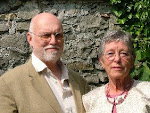
I retired to Lunel in the Languedoc region of southern France with my wife Mary and our Norfolk Terrier Trudy in late 2006. I had worked in the British voluntary sector for 25 years. We are proud parents of 3 sons, and we have 3 grandchildren.